The business world is full of surprising stories, unexpected achievements, and incredible facts that often go unnoticed. In this collection of the Top 10 Fascinating Business Facts That Will Amaze You, you’ll discover amazing insights behind some of the world’s most recognizable companies and brands. From unexpected business strategies to record-breaking accomplishments, these fascinating business facts reveal the hidden side of global success.
Did you know that LEGO produces more tires each year than Michelin? Or that McDonald’s earns a significant portion of its revenue through real estate rather than just selling burgers? Whether you’re an entrepreneur, business student, investor, or simply someone who enjoys learning interesting business trivia, these Top 10 Fascinating Business Facts That Will Amaze You are sure to surprise you and give you plenty of memorable conversation starters.
Top 10 Fascinating Business Facts That Will Amaze You:
10. Twitter Was Originally Codename “twttr”
9. American Express Started as a Freight Delivery Company
8. Blockbuster Laughed Off Buying Netflix for $50 Million
7. IKEA’s Name Is Actually a Clever Acronym
6. Walmart’s Revenue Is Bigger Than Many Countries’ Economies
5. Amazon Was Named After the World’s Largest River for a Reason
4. Nokia Started as a Paper Mill—Not a Phone Company
3. Coca-Cola’s Secret Recipe Is Guarded Like a National Treasure
2. McDonald’s Makes More Money as a Landlord Than a Burger Seller
1. LEGO Makes More Tires Than Any Car Company on Earth
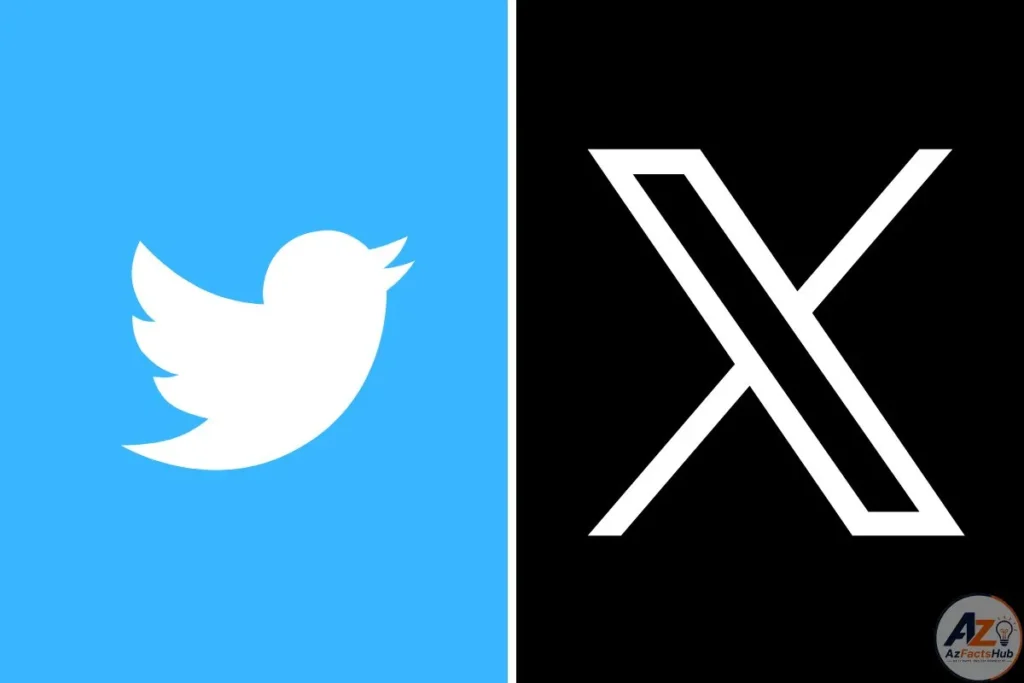
10. Twitter Was Originally Codename “twttr”
Before Twitter became X, its early development team used the internal codename “twttr” —with all the vowels dropped.
This wasn’t random. The platform’s early concept was tied to SMS text messaging, and the five-character length matched American short codes at the time. The name “Twitter” was chosen later because it captured the idea of short, quick bursts of information—just like a bird’s chirp. That original 140-character limit? Also borrowed from SMS constraints. The platform’s entire identity was shaped by the humble text message.
9. American Express Started as a Freight Delivery Company
Before American Express became the go-to card for travelers and rewards enthusiasts, it was a freight and express mail company founded in 1850.
For decades, Amex built its reputation on moving goods and money safely across the country. That trust in handling valuable cargo eventually led the company into financial services—first money orders and traveler’s cheques, then charge cards and credit cards. It’s a beautiful example of how a company’s core strength can evolve into something entirely unexpected.
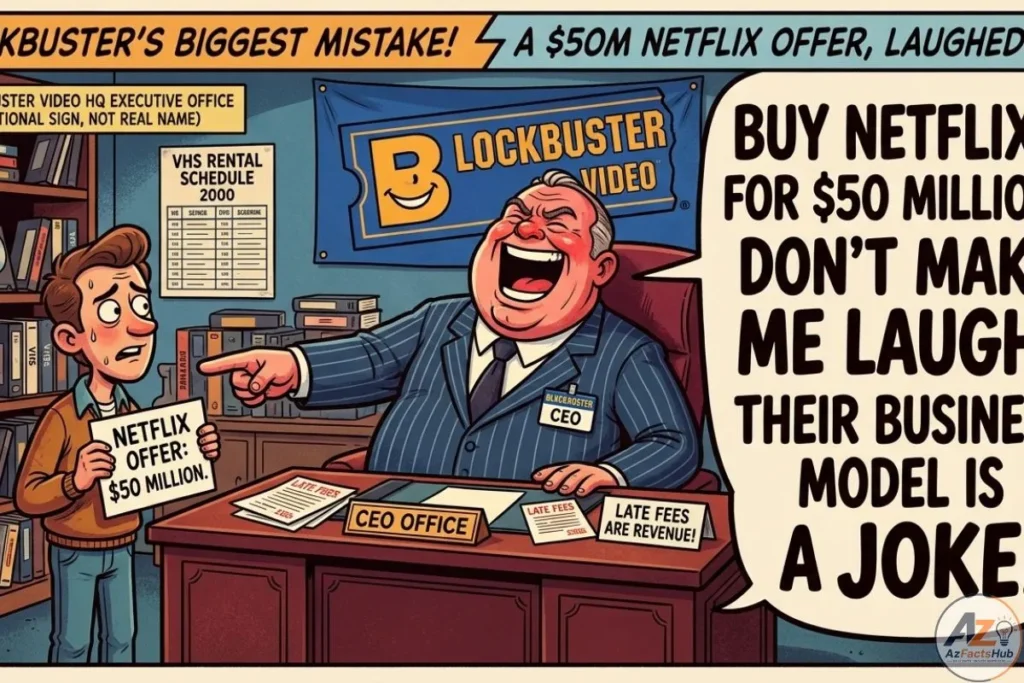
8. Blockbuster Laughed Off Buying Netflix for $50 Million
In 2000, Netflix was a struggling DVD-by-mail startup with just a few hundred thousand subscribers. Its co-founders flew to Dallas and offered to sell the company to Blockbuster for $50 million.
Blockbuster’s leadership reportedly laughed them out of the room. A decade later, Netflix was worth billions, while Blockbuster had filed for bankruptcy and shut down nearly all its stores. Even Blockbuster’s former CEO acknowledges that a conversation did take place—whether the laughter was real or not, the outcome remains one of the most expensive missed opportunities in business history.
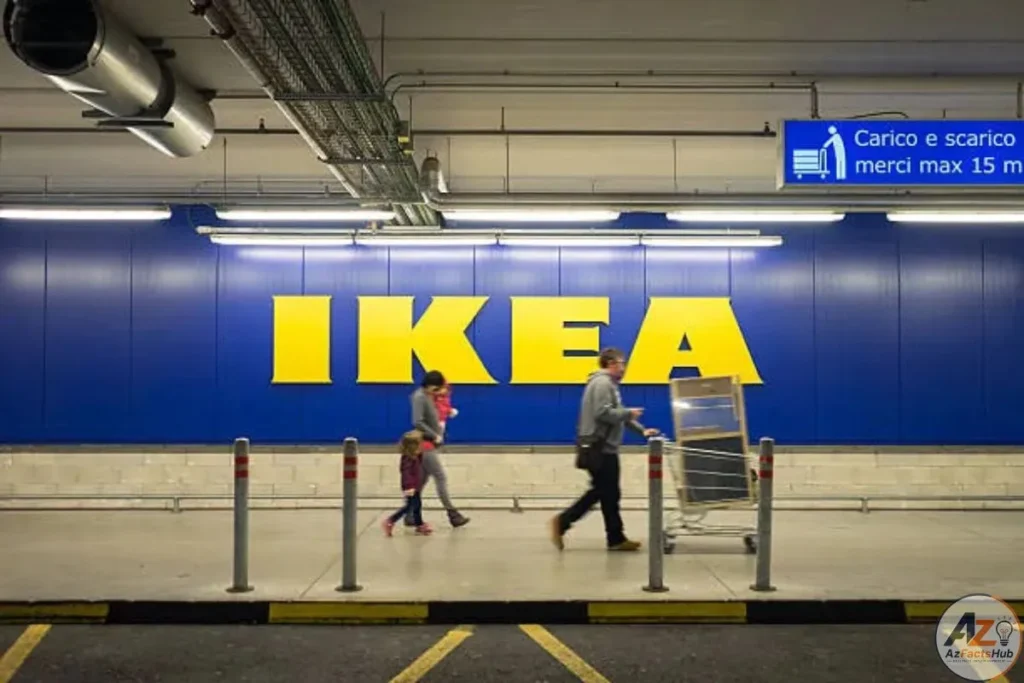
7. IKEA’s Name Is Actually a Clever Acronym
IKEA isn’t just a quirky Swedish-sounding word—it’s an acronym. The “IK” stands for Ingvar Kamprad, the company’s founder. The “EA” stands for Elmtaryd (the family farm where he grew up) and Agunnaryd (the nearby village).
Kamprad started the company in 1943 at just 17 years old, selling small household items like pens and wallets. The furniture empire came later. But the name itself is a deeply personal tribute to his roots—a reminder that even global giants often start with humble, human beginnings.
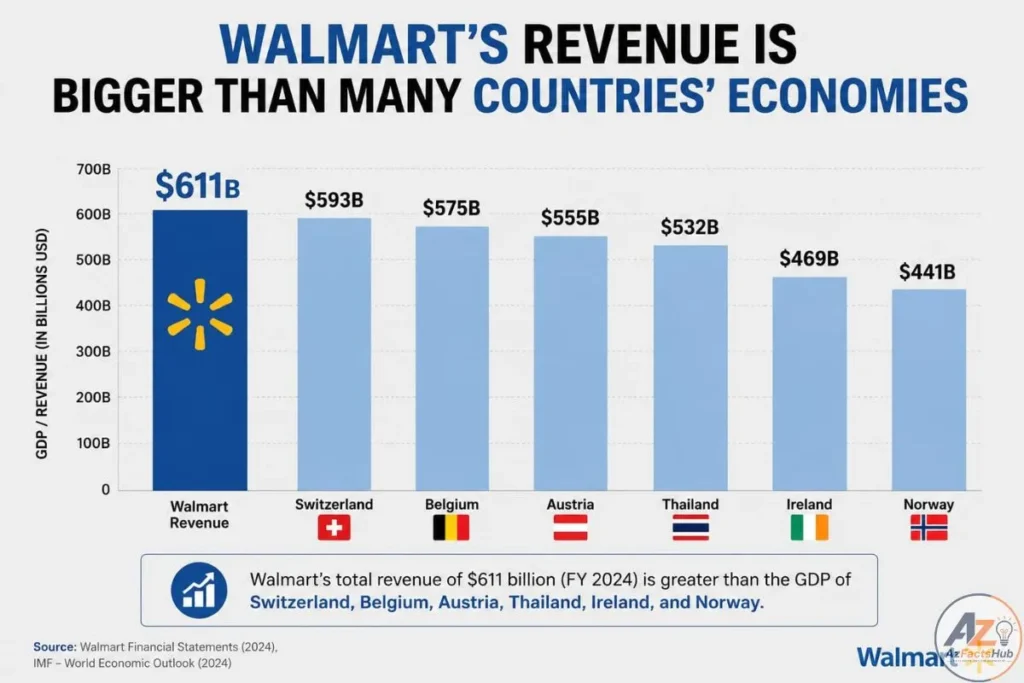
6. Walmart’s Revenue Is Bigger Than Many Countries’ Economies
Walmart’s annual revenue is so enormous that if you compared it to the GDP of entire nations, it would outrank countries with tens of millions of people.
This massive scale gives Walmart incredible leverage over suppliers, which helps keep prices low for customers. But it also means decisions made in Walmart’s corporate offices can ripple across global supply chains, affect local job markets, and influence entire industries. It’s a level of economic power that very few companies in history have ever achieved.

5. Amazon Was Named After the World’s Largest River for a Reason
When Jeff Bezos founded Amazon in 1994, he didn’t just pick a random word. He chose the Amazon River—the largest river in the world by volume—because he wanted the name to suggest massive scale from day one.
There’s also a clever detail in the logo: the arrow stretching from “A” to “Z” isn’t just a smile—it’s a subtle nod that Amazon sells everything from A to Z. What began as an online bookstore in a garage has become one of the most valuable companies on the planet, spanning cloud computing, streaming, logistics, and beyond.
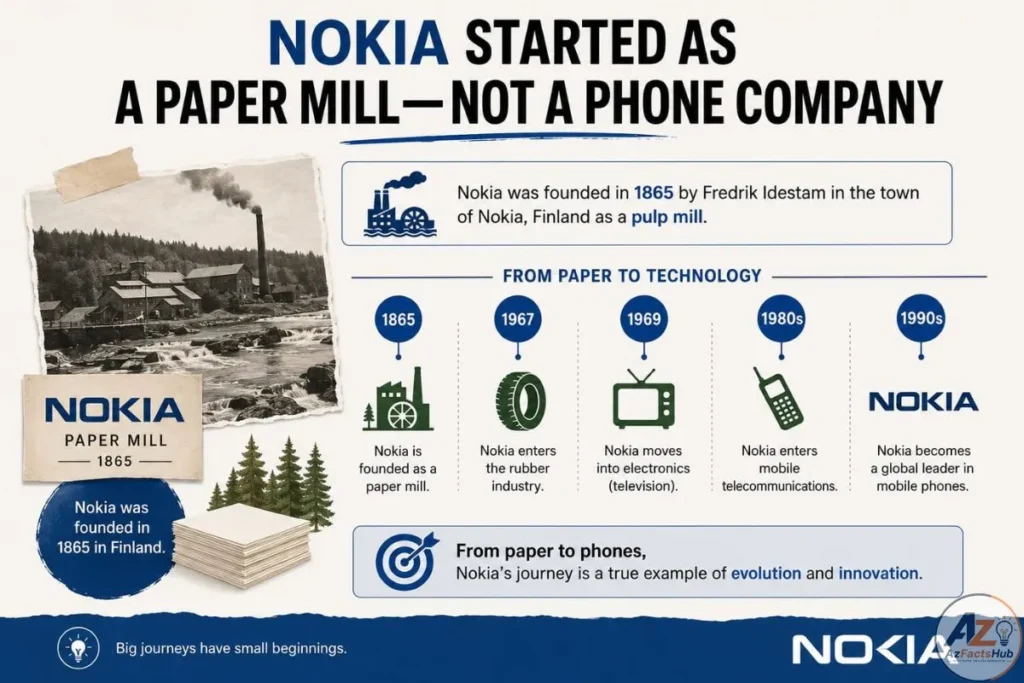
4. Nokia Started as a Paper Mill—Not a Phone Company
Before Nokia became synonymous with indestructible phones, it was a wood pulp and paper mill founded in 1865 on the banks of a Finnish river. For over a century, the company dabbled in rubber products, cables, and industrial goods before pivoting to telecommunications.
That ability to reinvent itself is exactly why Nokia survived as long as it did—even as its mobile phone dominance eventually faded. Today, Nokia has pivoted again, focusing on telecommunications infrastructure rather than consumer devices. It’s a powerful reminder that where a company starts is rarely where it ends up.
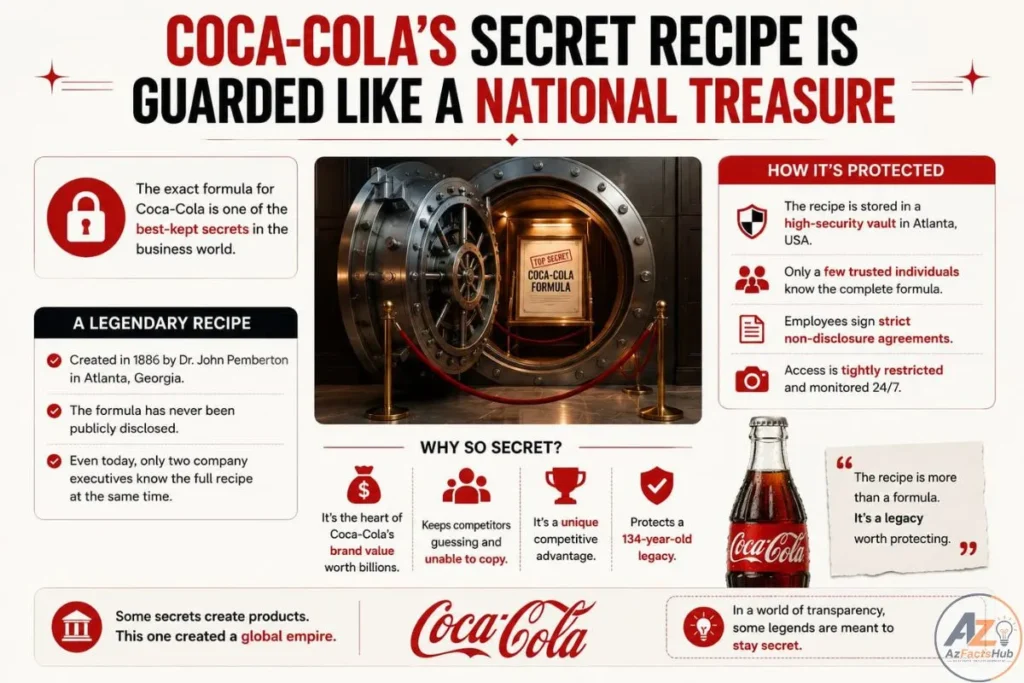
3. Coca-Cola’s Secret Recipe Is Guarded Like a National Treasure
The exact formula for Coca-Cola—officially called “Merchandise 7X”—has never been fully revealed. Not once in over 130 years.
Only a tiny handful of executives know the complete recipe at any given time, and no single person holds all the pieces. The written formula spent decades in a bank vault in Atlanta before being moved to a dedicated display at the World of Coca-Cola museum. Whether the recipe itself is truly irreplaceable or the mystique is the real secret, one thing is clear: Coca-Cola has turned corporate secrecy into one of the greatest marketing campaigns ever created.
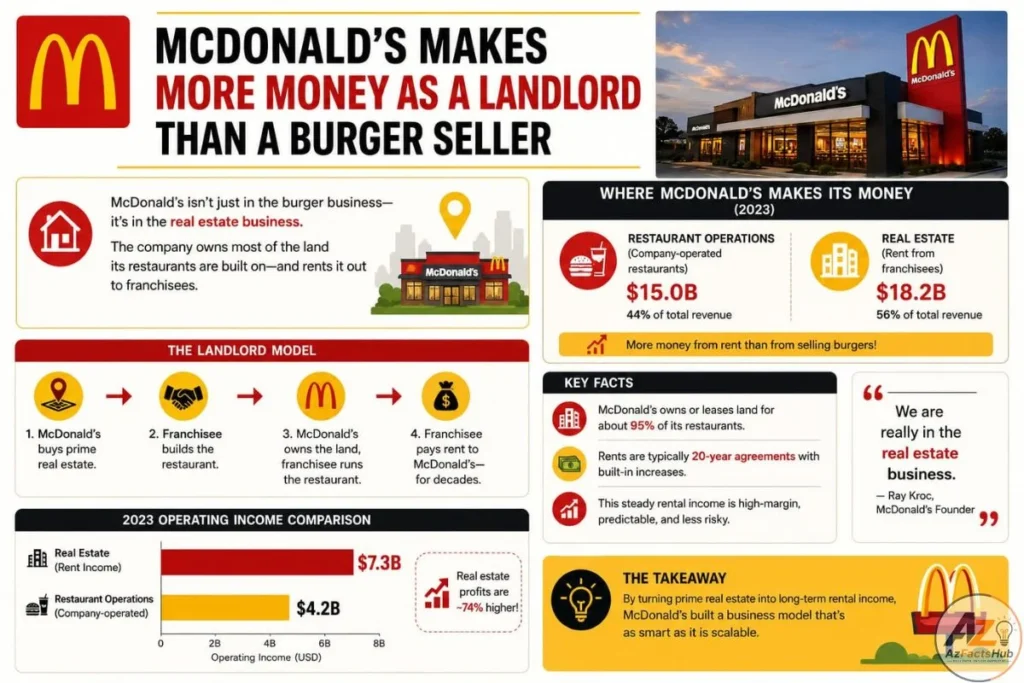
2. McDonald’s Makes More Money as a Landlord Than a Burger Seller
On the surface, McDonald’s sells hamburgers. But dig a little deeper, and you’ll find a real estate empire hiding in plain sight.
McDonald’s owns or holds long-term leases on the land beneath most of its restaurants. Then it charges franchisees rent—often with a cut of each location’s sales. That means even if a particular store sells fewer Big Macs one quarter, McDonald’s still collects steady rental income. Former CFO Harry Sonneborn once famously said the company wasn’t really in the food business—it was in the real estate business, and just happened to sell burgers on the side.
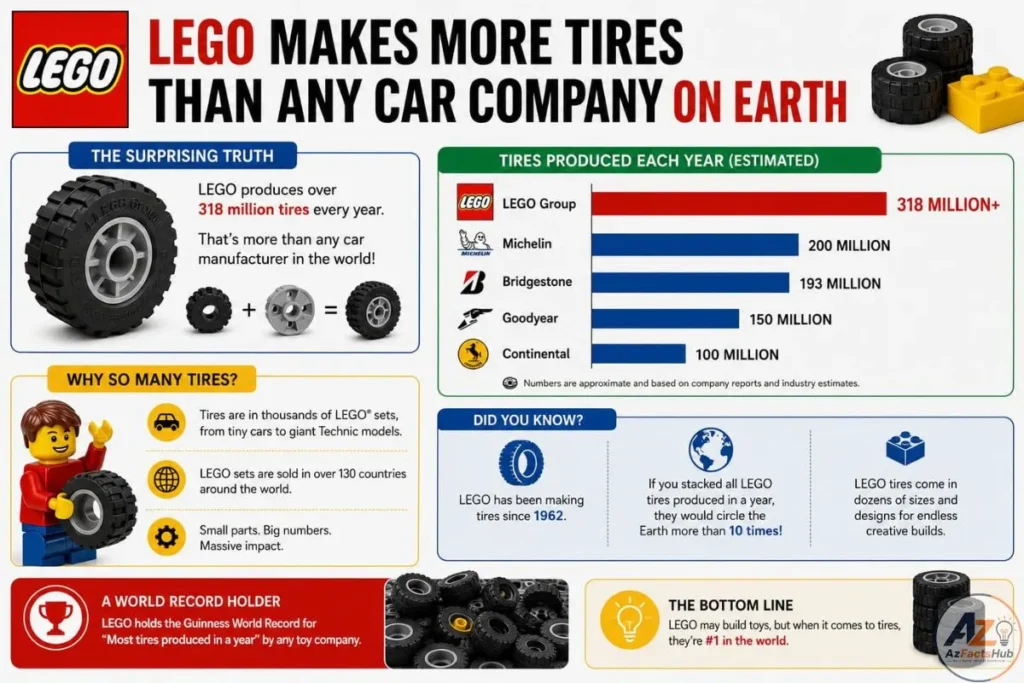
1. LEGO Makes More Tires Than Any Car Company on Earth
Yes, you read that right. LEGO produces over 300 million tiny rubber tires every single year—more than Michelin, Bridgestone, or Goodyear. It’s actually a certified Guinness World Record.
The reason? Nearly half of all LEGO sets include some kind of vehicle, from police cars to massive Technic supercars. And here’s the kicker: the rubber compound LEGO uses is technically close enough to real tire material that Guinness officially counts them. LEGO has even started making these miniature tires from recycled fishing nets and ropes. So yes, a toy company is quietly leading the charge on sustainable tire production. Who knew?
Final Thoughts: Business Is Full of Surprises
From a toy company that accidentally became the world’s largest tire manufacturer to a video rental giant that passed on buying Netflix for pocket change, these stories remind us that the business world rarely follows a straight line.
Companies pivot. Secrets get guarded like treasure. And one decision in a boardroom—sometimes made in minutes—can define a company’s fate for decades.
So the next time you sip a Coke, build a LEGO car, or scroll through Netflix, remember: behind every familiar brand is a story worth telling. And now, you’ve got ten of them.
Disclaimer: This article is for informational and educational purposes only. Images, logos, trademarks, and brand names belong to their respective owners and are used solely for identification and commentary under fair use where applicable. While we strive for accuracy, readers should verify important information from official sources.